
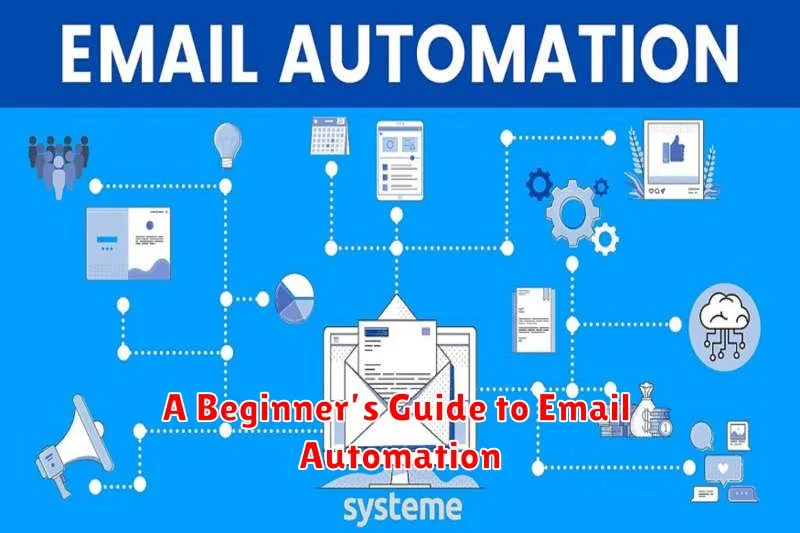
In today’s fast-paced digital world, email marketing remains a cornerstone of successful business strategies. However, managing email communications manually can be incredibly time-consuming and inefficient. This is where the power of email automation comes into play. Email automation allows businesses to send timely, targeted messages to their subscribers, nurturing leads, boosting engagement, and ultimately driving conversions. This beginner’s guide will provide a comprehensive overview of email automation, covering everything from the basics to more advanced strategies, empowering you to harness its potential for your own business growth.
Whether you’re a small business owner just starting out or a seasoned marketer looking to streamline your processes, understanding email automation is crucial for success. This guide will delve into the key benefits of email automation, such as increased efficiency, improved email marketing ROI, and enhanced customer relationships. You’ll learn about essential email automation tools and techniques, including setting up automated email sequences, personalizing email content, and analyzing campaign performance. By the end of this guide, you will have a solid foundation in email automation, ready to implement these strategies and elevate your email marketing efforts.
What Is Email Automation?
Email automation is the process of using software to send emails automatically based on preset triggers or schedules. Instead of manually composing and sending individual emails, you can create automated email sequences that deliver targeted messages to specific segments of your audience at the right time.
Think of it as setting up a sophisticated email robot that works 24/7. You define the rules and content, and the system handles the delivery, allowing you to focus on other important aspects of your business.
This automation goes beyond simply scheduling emails. It involves using data and customer behavior to personalize the messaging and optimize the timing of delivery. The goal is to improve efficiency, engagement, and ultimately, conversions.
Building Automated Workflows
Building automated workflows for your emails involves defining a series of actions that are triggered automatically based on specific events or criteria. This requires a clear understanding of your goals and the customer journey.
Start by identifying the trigger that will initiate the workflow. Common triggers include subscribing to a newsletter, abandoning a cart, or making a purchase. Next, determine the desired actions to follow the trigger. These could include sending a welcome email, a cart recovery reminder, or a post-purchase thank you.
Consider using a visual workflow builder to map out the process. This helps visualize the sequence of events and ensures a logical flow. Most email marketing platforms provide intuitive drag-and-drop interfaces for building workflows.
Testing is crucial. Before launching any automated workflow, thoroughly test it to ensure it functions as intended. This involves checking the trigger, actions, and timing to prevent errors and ensure a positive customer experience.
Segmenting Your Audience
Segmentation is crucial for effective email automation. It allows you to send targeted messages to specific groups within your audience, increasing engagement and conversions. Instead of a one-size-fits-all approach, you deliver content relevant to each subscriber’s interests and needs.
You can segment your audience based on various criteria:
- Demographics: Age, gender, location
- Behavior: Purchase history, website activity, email engagement
- Interests: Products or content they’ve interacted with
- Engagement Level: How often they open or click your emails
By strategically segmenting, you avoid sending irrelevant emails that could lead to unsubscribes. You also maximize the impact of your automated campaigns by delivering the right message to the right person at the right time.
Setting Triggers and Conditions
Triggers initiate your automated emails. A trigger is the event that starts the automation sequence. Common triggers include subscribing to a newsletter, abandoning a cart, or making a purchase.
Conditions add a layer of specificity, allowing you to target subscribers based on their behavior or data. This ensures the right message reaches the right person at the right time. For example, you might send a welcome email only to new subscribers who joined through a specific landing page.
Understanding the interplay between triggers and conditions is crucial for effective email automation. Carefully setting these parameters ensures relevant and timely communication with your audience.
Tracking Open and Click Rates
Tracking open and click rates is crucial for understanding the effectiveness of your automated email campaigns. These metrics provide insights into how your audience engages with your content and helps identify areas for improvement.
Open rates measure the percentage of recipients who open your emails. A low open rate might indicate issues with your subject lines or sender information. Experiment with different subject lines, personalization techniques, and sending times to optimize open rates.
Click rates, also known as click-through rates (CTR), measure the percentage of recipients who clicked on a link within your email. This metric reflects the effectiveness of your email content and call to action. A low click rate might suggest that your content isn’t resonating with your audience or that your call to action isn’t compelling enough.
By analyzing these metrics, you can refine your email automation strategy and improve your overall campaign performance. Regularly monitor your open and click rates to identify trends and make data-driven decisions.
Testing and Improving Campaigns
Once your automated email campaigns are running, the work doesn’t stop there. Continuous testing and improvement are crucial for maximizing their effectiveness. A/B testing is a valuable method for optimizing various elements.
Experiment with different subject lines to see which ones generate higher open rates. Try variations in the email copy itself, testing different wording, calls to action, and overall messaging. You can also test sending times to determine the optimal time for reaching your target audience.
Analyze the results of these tests. Which versions resulted in higher open rates, click-through rates, and conversions? Use this data to refine your campaigns and iterate on your designs. This iterative process will lead to more effective email automation over time.
